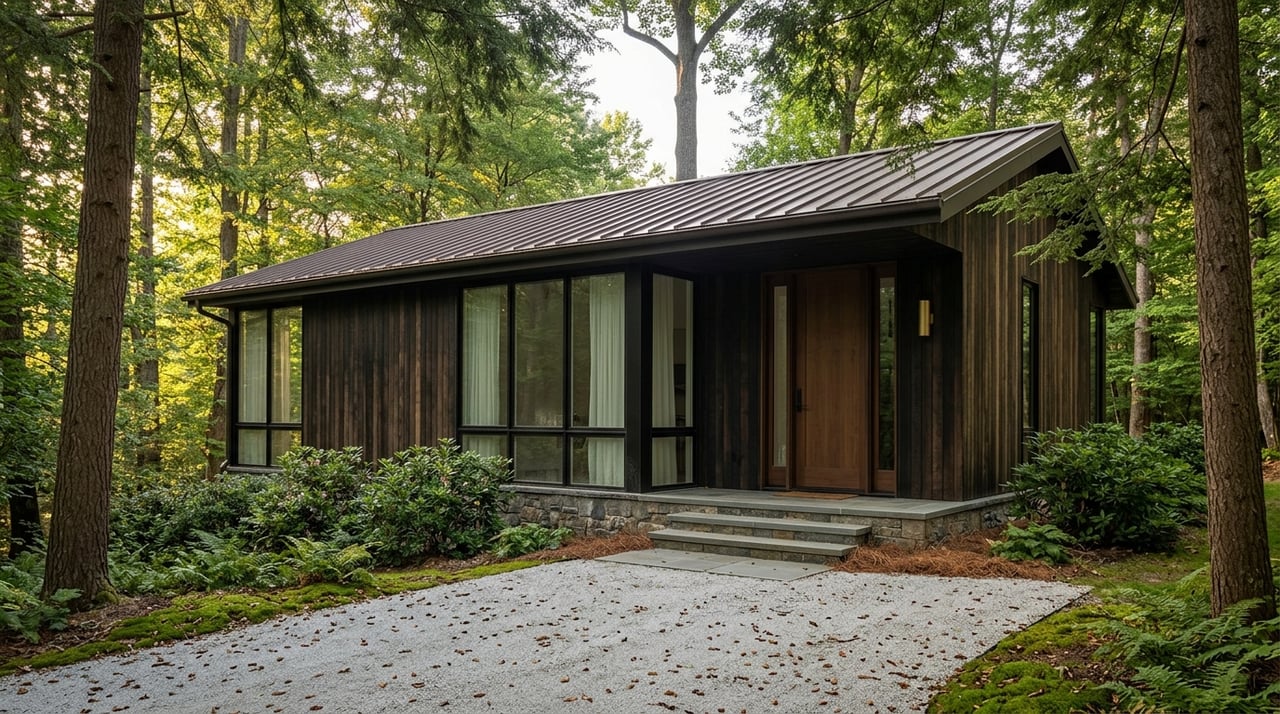
What to Know Before You Buy Land Near Brevard, NC
June 4, 2026
June 4, 2026
If you have ever fallen in love with a mountain view and thought, we should build here someday, you are not alone. Buying land near Brevard can be an exciting first step, but it also comes with questions that do not always come up when you buy an existing home. The good news is that with the right local homework, you can avoid expensive surprises and choose a lot that truly fits your future plans. Let’s dive in.
A beautiful lot is not automatically a buildable lot. In and around Brevard, the key issue is often not just what the land costs, but whether it can support a future home once you review access, septic, well needs, floodplain concerns, and jurisdiction.
That matters because rules can change depending on where the parcel sits. Transylvania County says there is no county-wide zoning outside the Town of Rosman and the City of Brevard and its extraterritorial jurisdiction, but county land-use ordinances may still apply in certain areas, including mountain ridge protection, scenic corridors, and Pisgah Forest Community Zoning.
Inside Brevard and its ETJ, the city planning department handles zoning, subdivision permissions, floodplain development, land development review, and code enforcement. The county building department handles North Carolina building code permits and inspections countywide. Before you get attached to a property, it helps to know which office will govern the next steps.
One of the first questions to answer is whether the parcel is inside the City of Brevard, inside the ETJ, or under county jurisdiction. That single detail affects which rules apply to zoning, floodplain review, and development approvals.
Transylvania County recommends checking GIS layers for flood, ETJ, and zoning when evaluating a parcel. This is an important early step because a lot that looks simple on paper may carry limits that affect where or how you can build.
If you are planning a future mountain home, this is where local guidance matters. A parcel outside city limits may still be affected by county ordinances, and a parcel near Brevard may have a very different review process than you expect.
Online maps are helpful for a first look, but they are not enough for a final decision. Transylvania County says tax maps are not legal documents and are maintained from recorded deeds, plats, and court records.
That is why deed review and a survey are such important parts of your due diligence. You want to know exactly what you are buying, whether any easements affect the property, and whether the usable homesite matches your expectations.
Access is just as important as boundaries. Buyers should confirm road frontage and whether access depends on a private road or a state-maintained road, because that can create added permit requirements and long-term maintenance obligations.
Mountain lots often look easy to reach until you start planning a driveway. If your future access connects to the State Highway System, NCDOT says a driveway permit is required for developing or altering that access.
This is not something to leave until the last minute. NCDOT advises buyers to contact both the local land-use authority and the district engineer early, and even simple driveway permit requests may take about four weeks or more.
Road design matters, too. Transylvania County’s subdivision ordinance stresses that roads and turnarounds must be large enough for emergency vehicles, and drainage must be adequate to prevent erosion. On sloped mountain land, that can affect both cost and layout.
For many vacant parcels near Brevard, septic is one of the biggest make-or-break issues. If a property does not have sewer service, Transylvania Public Health requires both an Improvement Permit and an Authorization for Wastewater System Construction for a new home.
The county evaluates the site based on soil and topography, and the Improvement Permit is valid for five years. Just as important, the county warns buyers not to rely on a claim that land will perc unless a valid Improvement Permit has actually been issued.
That means seller statements or old assumptions are not enough. If you are buying now and planning to build later, septic due diligence should be near the top of your list.
If a property is not served by public water, you will likely need a private well. In that case, a well permit is required.
Newly constructed private wells in North Carolina must also be tested before they are used as drinking water. Transylvania’s local health department can test for bacteria, chemicals, nitrates, nitrites, pesticides, petroleum, and VOCs.
Inside the City of Brevard, water and sewer service is handled through city utilities. Outside city service areas, you should be prepared to verify whether utility extension is needed and budget for private well and septic systems if public service is unavailable.
Mountain land can be stunning, but terrain always deserves a close look. FEMA’s Flood Map Service Center is the official public source for flood-hazard maps, and local floodplain administrators may require permits before work begins.
In Transylvania County, development in the floodway or non-encroachment area is prohibited unless engineered certification is provided, and a plot plan plus elevation certificate may be required. If part of a lot falls in a flood-prone area, that can change where you place the home, driveway, and septic system.
Ridge and slope issues can matter too. The county’s Mountain Ridge Protection Ordinance applies to tall structures on ridges that are at least 500 feet above an adjacent valley floor and at least 3,000 feet in elevation. Depending on the parcel, scenic corridor rules may also affect what is allowed.
One of the biggest mistakes land buyers make is focusing only on purchase price. With mountain lots, site prep can become a major part of the total investment.
The county’s residential permit packet requires septic approval, a GIS tax map or survey showing the structure location, a site address, city zoning approval when applicable, and erosion control drawings for land-disturbing activity of 4,000 square feet or more. If the project disturbs more than 1 acre, a state erosion-control plan is required.
Some sites also need significant grading, utility extension, or retaining walls. In Transylvania County, retaining walls over 4 feet require a design professional. These are the kinds of details that can change your build budget long before construction begins.
If you plan to buy now and build later, it helps to know what the county expects once construction starts. In Transylvania County, a building permit is required for structural, plumbing, mechanical, gas, or electrical work.
Residential permit review typically takes one to two days. The first inspection must occur within six months, and the permit expires if the time between inspections exceeds 12 months.
Certain home styles can add another layer of planning. The county says log or timber-frame construction requires sealed plans from a North Carolina design professional, and the same applies to retaining walls over 4 feet. Local design values also include 115 mph wind speed, 20 psf roof load, 20 psf snow load, and a 12-inch frost line.
If your goal is a future mountain home, talk through financing early. Construction loans are usually short-term, often fund work in stages, may have higher interest rates than longer-term mortgages, and may convert to permanent financing depending on the lender.
Even if you are not ready to build right away, understanding your likely financing path can help you set a realistic land budget today. It can also help you decide whether to pursue a lot that needs more site work, permitting, or utility investment.
Before you move forward on land near Brevard, make sure you can answer these practical questions with confidence:
When you can answer those questions early, you put yourself in a much stronger position to choose land that supports your goals instead of slowing them down.
Buying land for a future mountain home should feel exciting, not uncertain. With the right due diligence and local insight, you can sort through the details, compare parcels more clearly, and move forward with confidence near Brevard and across Transylvania County. If you are thinking about land, homesites, or a future build, connect with Heather Scott for knowledgeable, local guidance.
Stay up to date on the latest real estate trends.
October 22, 2026
October 15, 2026
October 8, 2026
October 1, 2026
September 24, 2026
September 17, 2026

September 10, 2026
September 3, 2026
August 27, 2026
Reach out to for expert real estate services. Buy, sell, or rent properties with confidence. Contact us today!