In-Town or Outskirts? Understanding Brevard Micro-Markets
April 23, 2026
April 23, 2026
If you have been watching home prices around Brevard and wondering why one number never seems to tell the whole story, you are not imagining it. Brevard is not one simple market. It is a group of distinct micro-markets shaped by setting, access, lot size, and lifestyle. If you are buying or selling in Transylvania County, understanding those differences can help you make a smarter move. Let’s dive in.
A single countywide or citywide average can hide a lot. According to the U.S. Census QuickFacts for Brevard and Transylvania County, Brevard had 7,973 residents in July 2024 across 5.35 square miles, while Transylvania County had 34,103 residents across 378.36 square miles. That creates a very different feel inside the city compared with the county as a whole.
The same data shows clear differences in daily living patterns. Brevard has a higher population density, a lower owner-occupied housing share, and a shorter average commute time than the county. In practical terms, that points to a denser in-town core and more owner-occupied rural housing outside city limits.
Geography also plays a big role in how these markets behave. Transylvania County sits in the mountains of Western North Carolina between Asheville and Greenville, with access to Pisgah National Forest, Gorges State Park, DuPont State Forest, and roughly 250 waterfalls. When you add that outdoor setting to a compact downtown, you get housing segments that can differ a lot in both price and buyer appeal.
If you want to be close to shops, restaurants, events, and city services, in-town Brevard stands out. The Heart of Brevard downtown core includes more than 110 independently owned businesses, historic architecture, tree-lined streets, and well-known local events. The social district map centers around Main, Caldwell, Broad, Probart, Jordan, and Gaston streets, which helps define the walkable heart of town.
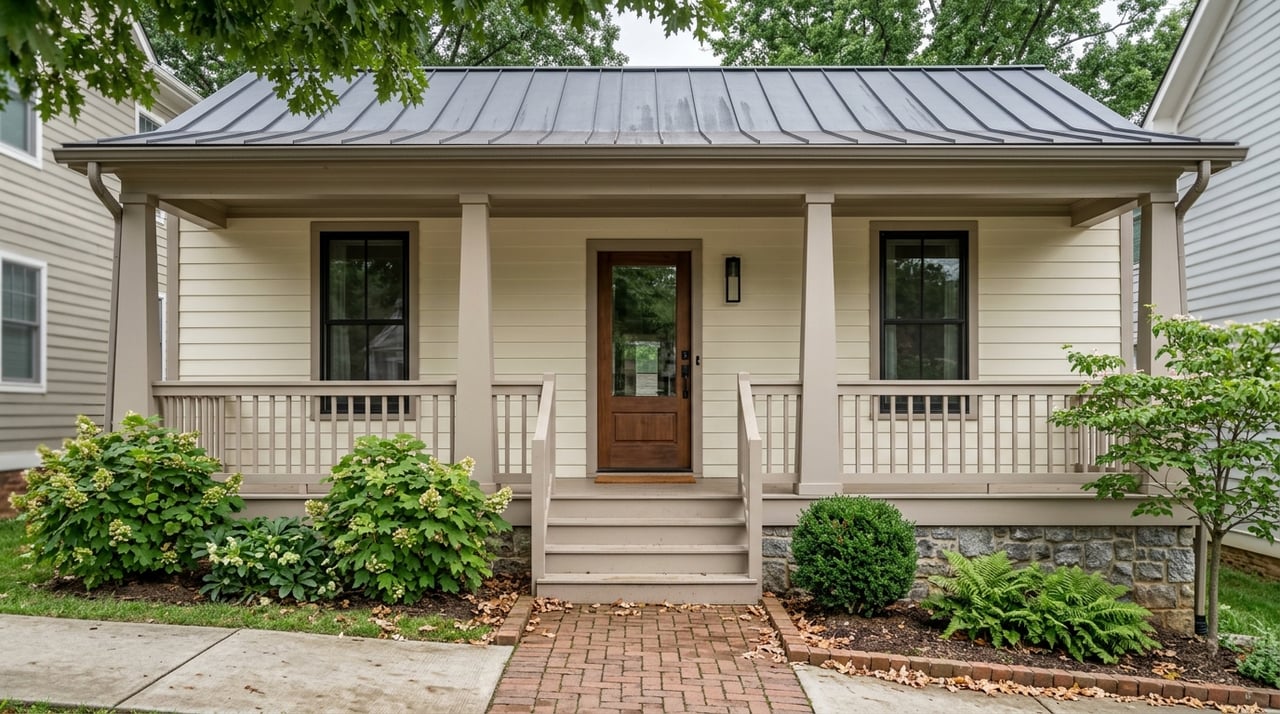
That convenience often shows up in both housing style and pricing. In-town homes tend to include older cottages, bungalows, lofts or condos, smaller lots, and occasional infill construction. Listings in 28712 often highlight proximity to Main Street, city streets, and city water and sewer rather than acreage or privacy.
Pricing supports that convenience premium. Zillow’s 28712 home value data shows a typical home value of $471,086 as of March 31, 2026, while the broader Brevard city typical value is $464,518. The research also notes March 2026 median sale data in town at $520,000, which reinforces that buyers often pay more for easy access and a compact downtown lifestyle.
Once you move outside the core, the market starts to branch out. Areas like Pisgah Forest and Cedar Mountain are not simply “outside town.” They are their own setting-based markets, with more land, more privacy, and wider price variation.
In Pisgah Forest, the typical home value is $453,654. The research also cites a March 2026 median sale price of $500,000. Homes there often come with wooded lots, mountain views, and a short drive to downtown Brevard, making the area appealing if you want a balance between convenience and elbow room.
Cedar Mountain leans even more into the recreation-oriented side of the market, with a typical home value of $396,207. The area’s location near Pisgah National Forest, Gorges State Park, and DuPont State Forest helps explain why lot size, natural setting, and outdoor access can matter just as much as the house itself.
As you move farther from town, the numbers shift again. Rural areas like Balsam Grove and Rosman tend to show lower typical values than Brevard proper, but they also come with a different housing mix. Larger parcels, more rustic homes, manufactured homes, and cabin-style properties are more common in these pockets.
Balsam Grove has a typical home value of $324,008, while Rosman is at $320,252 based on the research report. Rosman’s March 2026 median sale price was $277,000, with a median 184 days on market. That longer market time suggests buyers and sellers in these outer areas may need more patience and more precise pricing.
For buyers, these areas can offer land-heavy opportunities at a lower price point than in-town Brevard. For sellers, it means the property story matters. Acreage, road access, views, and the feel of the land may shape value more than simple square footage.
One of the biggest mistakes buyers make is assuming the outskirts are always cheaper. In Transylvania County, that is not true. Lake Toxaway is a strong example of an outer-area market that sits in a much higher tier.
The research shows a typical home value of $675,364 in 28747. It also cites a March 2026 median sale price of $1,075,000 and a median list price of $1,516,667. That spread makes an important point: premium lake and mountain settings can command a major premium over Brevard proper.
If you are shopping there, the comparison set should not come from downtown Brevard or more rural value pockets. If you are selling there, your pricing and marketing strategy should reflect a luxury lifestyle buyer, not a general county average.
Across Brevard and Transylvania County, three factors show up again and again: setting, land, and access. In-town listings often emphasize walkability, city services, and convenience. Near-town and wooded-ring properties tend to emphasize acreage, privacy, views, and proximity to recreation.
That means price differences are not always about home size alone. A smaller in-town bungalow may compete well because it is close to Main Street and connected to city utilities. A larger home outside town may trade based on privacy, mountain views, or the amount and usability of the land.
This is also why countywide averages can be misleading. The countywide typical home value is $474,865, but that figure blends together low-$300,000 rural pockets, mid-$400,000 in-town and near-town markets, and much higher lake-focused pricing. The more specific the setting, the more useful the pricing comparison becomes.
If you are buying in Brevard or the surrounding area, it helps to ask the same core questions every time you tour a property. Those questions can quickly reveal whether two homes are actually comparable.
Here are a few of the most useful ones:
The goal is simple: compare homes that compete for the same type of buyer. A downtown loft and a wooded cabin may be in the same county, but they appeal to very different priorities.
If you are selling, the biggest takeaway is that your home should be evaluated inside the right micro-market. A downtown bungalow should not be priced against a rural acreage property just because both are in Transylvania County. The same goes for a private mountain home or a lakefront retreat.
Your marketing should also match the setting. In-town properties usually benefit from highlighting character, convenience, and access to downtown amenities. Wooded and rural properties often need photography and copy that emphasize land, privacy, views, and outdoor access.
That local, setting-based approach is especially important in a place like Brevard, where buyer motivation can vary so much. Some buyers want to walk to Main Street. Others want a quiet road, a larger tract, or quick access to the forest. The right pricing and positioning starts with knowing which audience your property fits.
If you are trying to decide whether in-town Brevard or the outskirts fit your goals, or if you want a pricing strategy built around your home’s true micro-market, working with a local guide can make the process much clearer. Connect with Heather Scott for locally informed advice on buying or selling in Brevard and across Transylvania County.
Stay up to date on the latest real estate trends.
June 4, 2026
May 21, 2026
May 14, 2026
May 7, 2026
April 23, 2026
April 16, 2026
April 2, 2026
March 24, 2026
March 5, 2026
Reach out to for expert real estate services. Buy, sell, or rent properties with confidence. Contact us today!